
AR Electronics provides security lighting and electrical services in Auckland for homes, businesses, warehouses, car parks, yards, and commercial sites that need better visibility and more reliable security infrastructure. From LED floodlights and sensor lighting to power supplies for CCTV, access control, alarms, and gates, we help ensure your system can actually do its job.
Good security lighting serves two critical purposes: it helps your cameras capture clear footage, and it deters criminals before they even attempt entry.
In 2024, New Zealand Police recorded nearly 45,000 burglaries nationwide. Unlit properties are significantly more likely to be targeted because darkness provides cover for criminals to approach, assess, and enter without being seen. Proper lighting eliminates hiding spots and makes intruders visible — both to your CCTV system and to anyone passing by.
Modern LED security lighting is energy-efficient, long-lasting, and can integrate with your alarm and access control systems. Motion-activated lights conserve energy while providing instant illumination when movement is detected. The result: better security footage, stronger deterrence, and lower running costs.
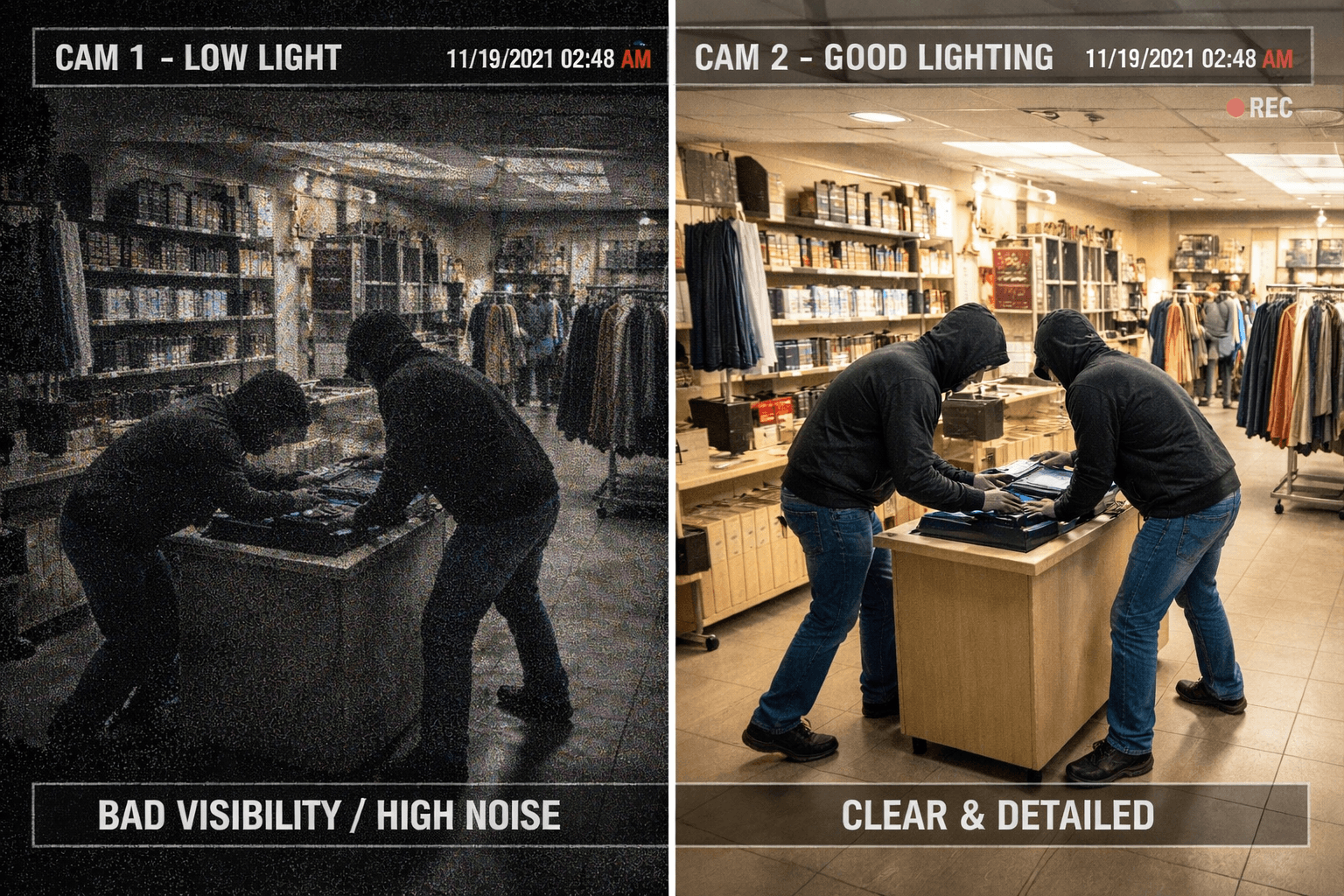
We design, supply, and install security lighting solutions for commercial, industrial, and residential properties across Auckland. Every installation is tailored to your site's layout, security requirements, and existing systems.
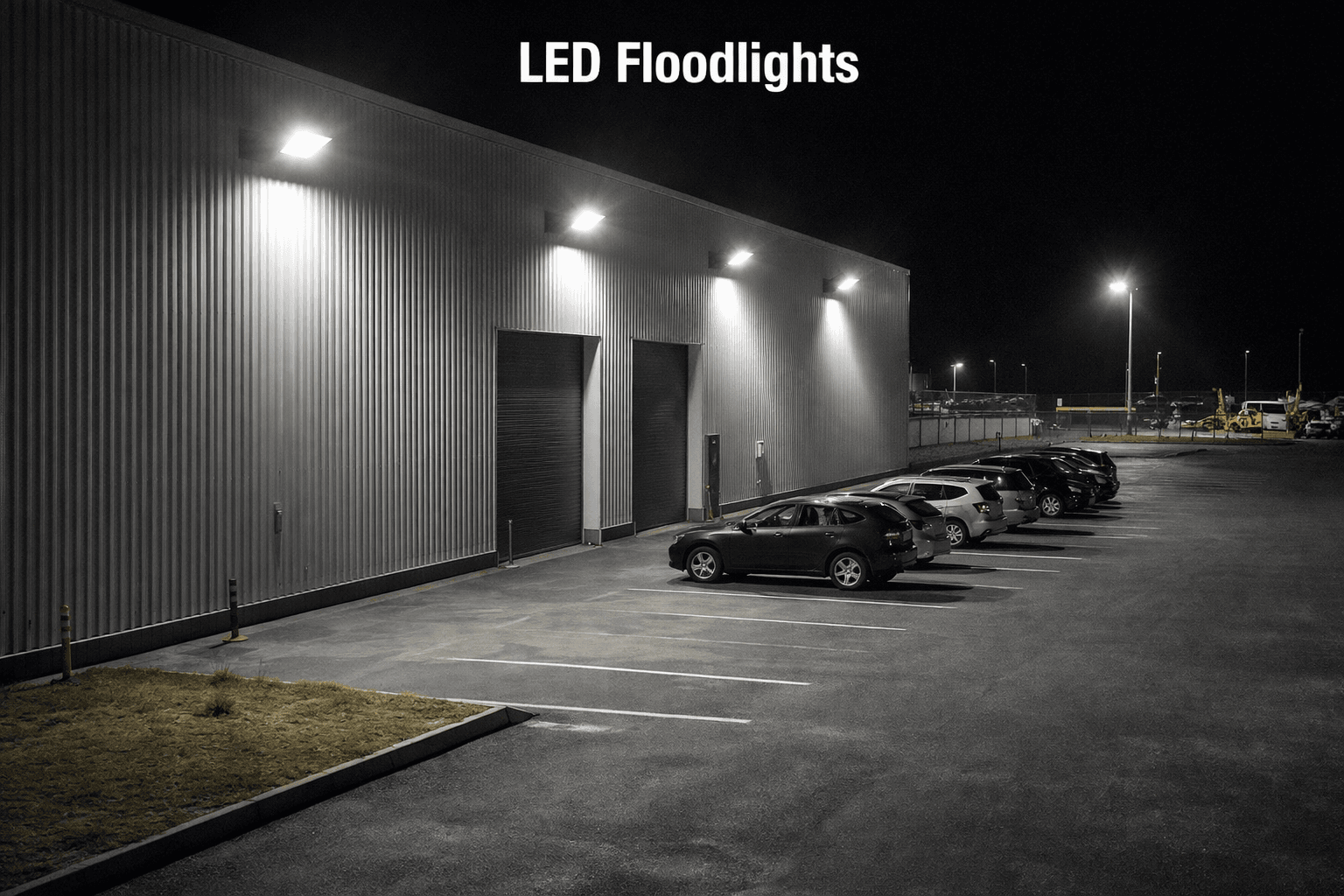
High-output LED floodlights provide broad, powerful illumination for large areas such as car parks, warehouses, yards, and building perimeters. Modern LEDs deliver superior brightness with a fraction of the energy consumption of older halogen or metal halide fixtures.
Key features:
Applications: Car parks, loading docks, warehouse yards, sports courts, building facades, perimeter fencing
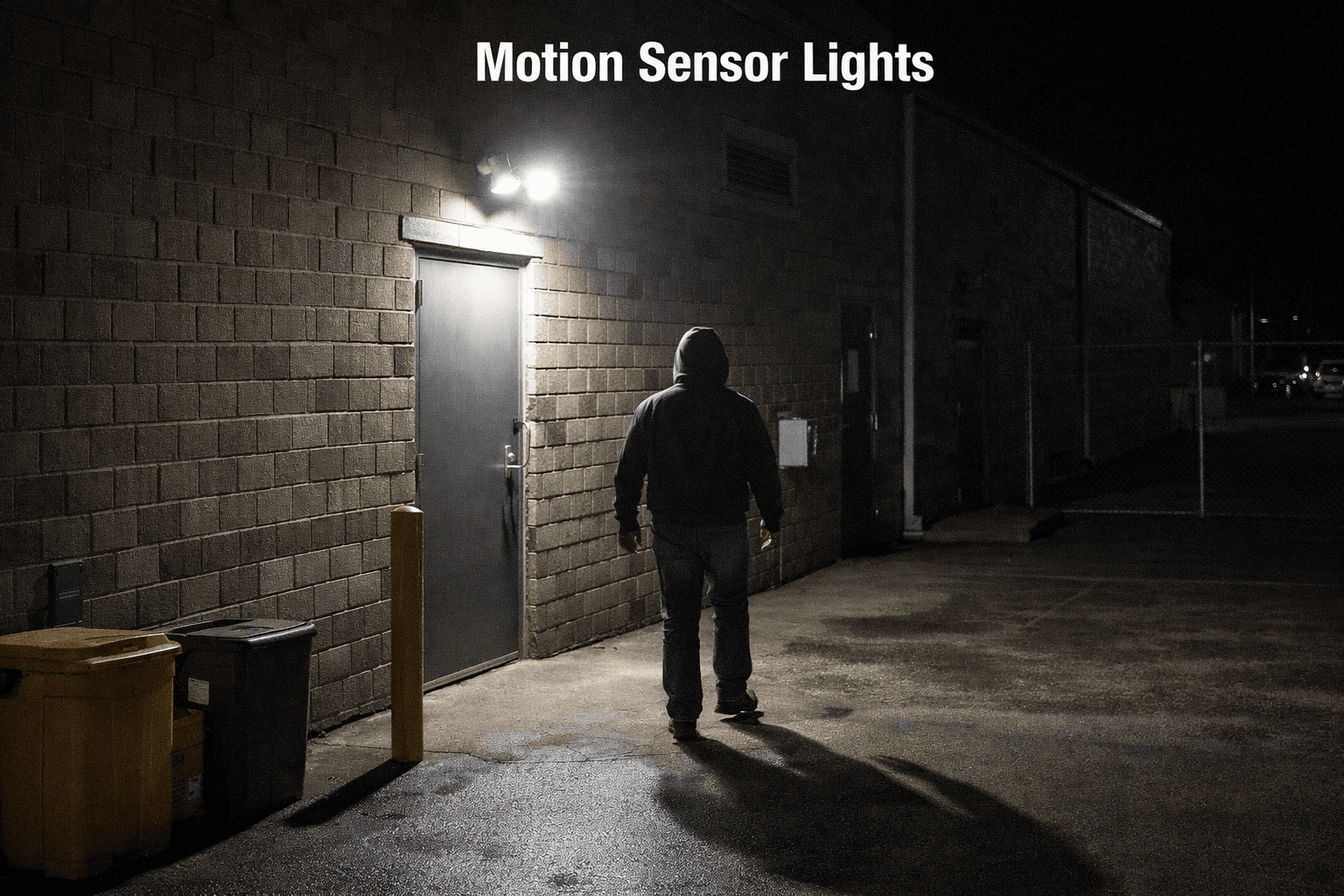
PIR (Passive Infrared) motion sensor lights activate automatically when movement is detected, providing instant illumination while conserving energy when areas are unoccupied. They're ideal for entries, pathways, and any location where constant lighting isn't necessary.
Key features:
Applications: Entrances, side passages, driveways, garages, stairwells, fire exits, residential exteriors
Installation tip: Mount motion sensor lights 2–3 metres above ground level for optimal detection. Position sensors to cover likely approach paths while avoiding obstructions like trees or large objects that could trigger false activations.
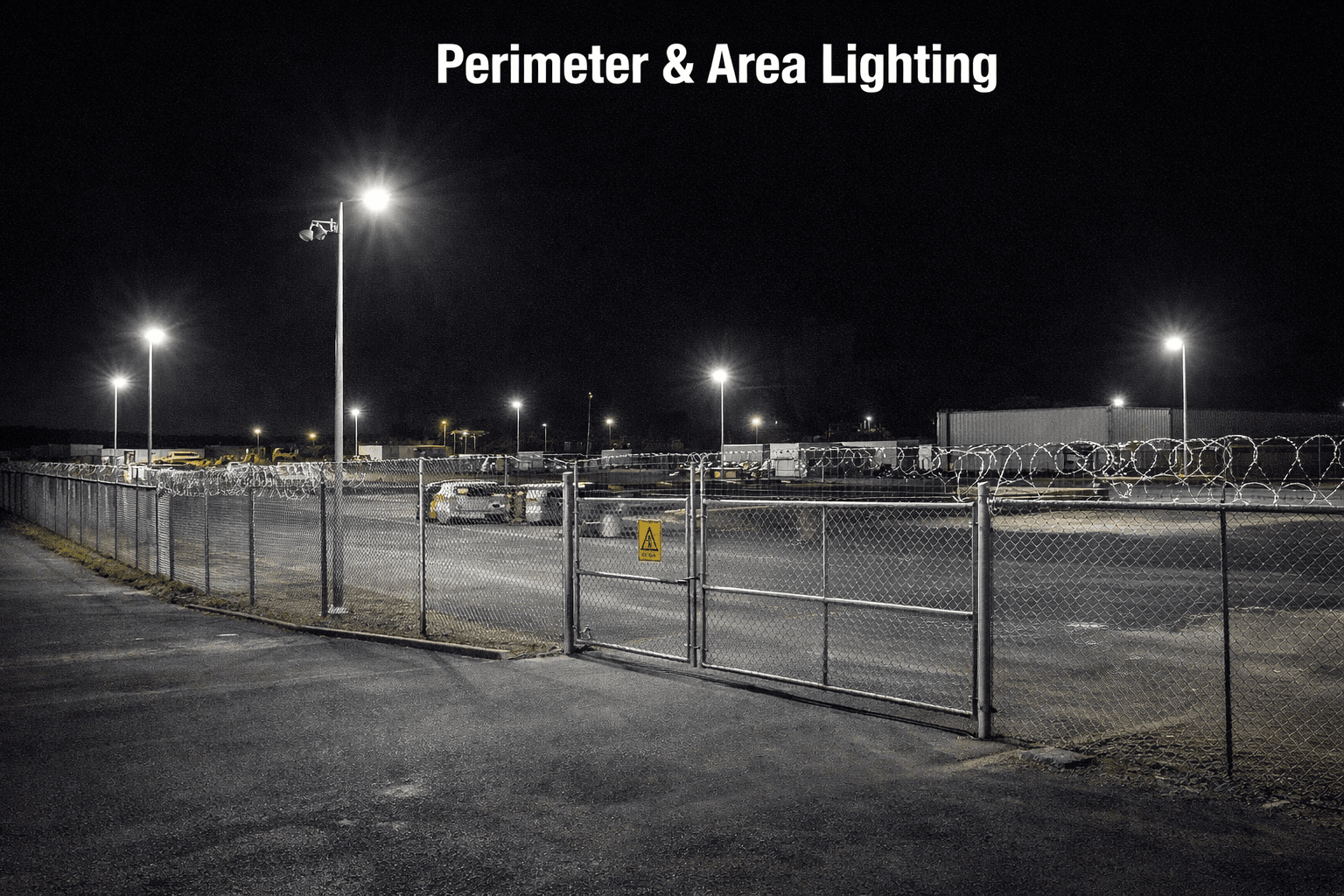
Comprehensive perimeter lighting creates a visible boundary around your property, eliminating dark zones where intruders could approach undetected. Combined with CCTV, it provides complete coverage of your site's exterior.
Solutions include:
We design lighting layouts to complement your CCTV camera positions, ensuring every camera has adequate illumination for clear footage — day or night.
Commercial buildings with compliance schedules require emergency lighting systems that meet NZ Building Code clause F6 (Visibility in Escape Routes) and comply with AS/NZS 2293. As registered IQPs, we install, test, and certify emergency lighting systems to keep your building compliant.
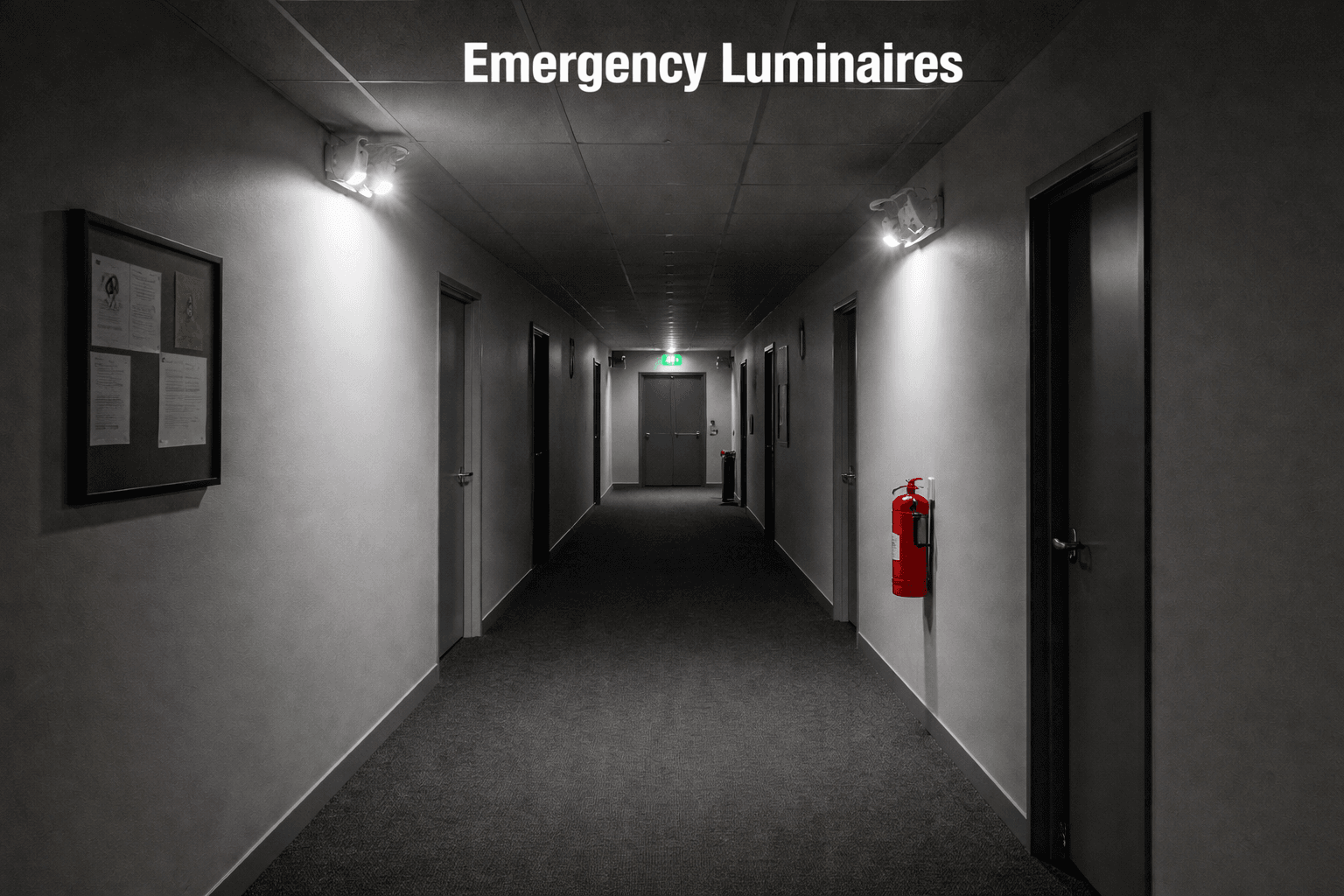
Emergency luminaires provide illumination along escape routes when normal lighting fails. They activate automatically during power outages, guiding occupants safely to exits.
System types:
Product options:
Standards: AS/NZS 2293.1 (design and installation), AS/NZS 2293.3 (product requirements)
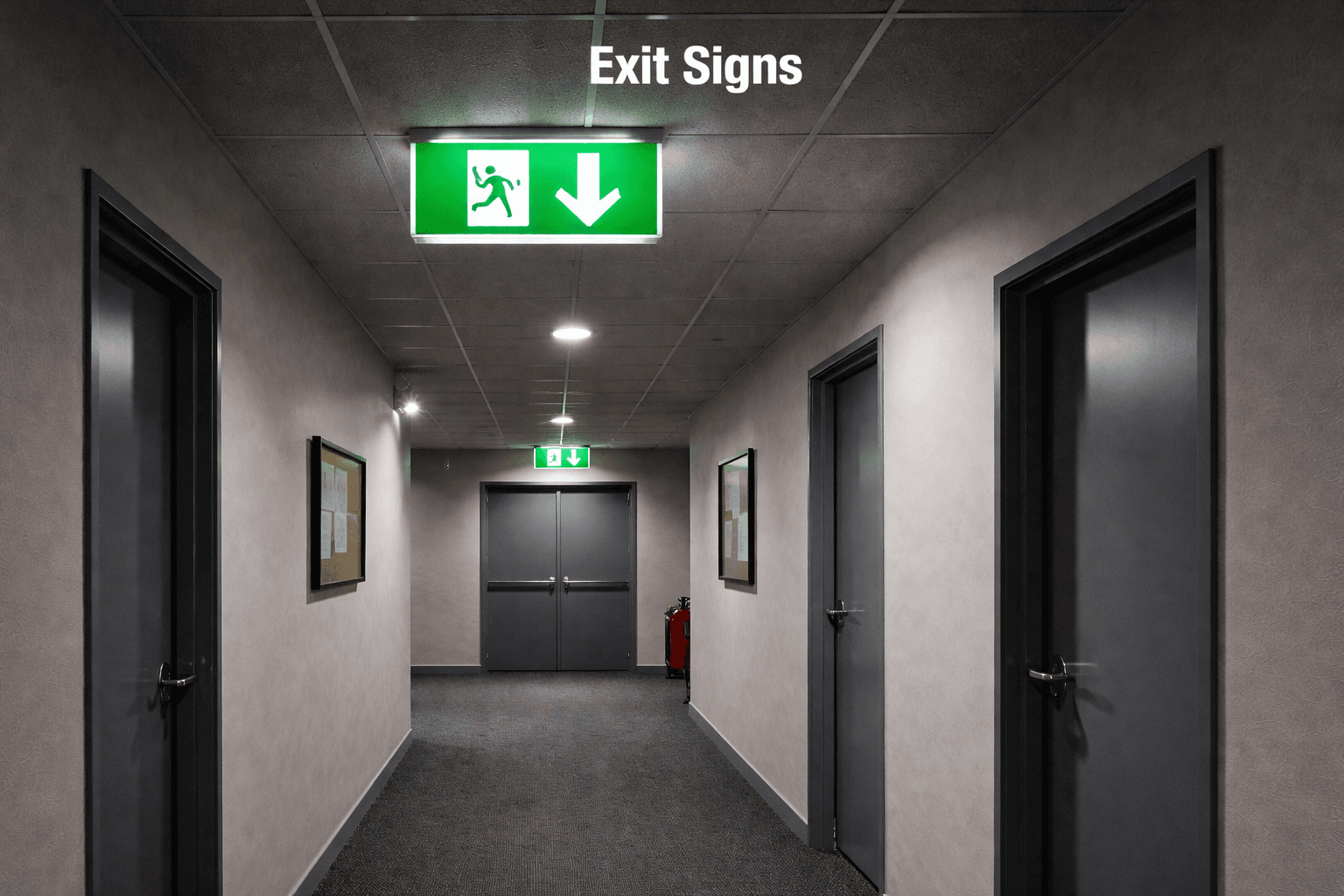
Illuminated exit signs identify escape routes and final exits, remaining visible even in smoke or darkness. They must comply with AS/NZS 2293 for viewing distance, mounting height, and positioning.
Key requirements:
Options: Edge-lit blade signs, box signs, pictogram signs, running man symbols
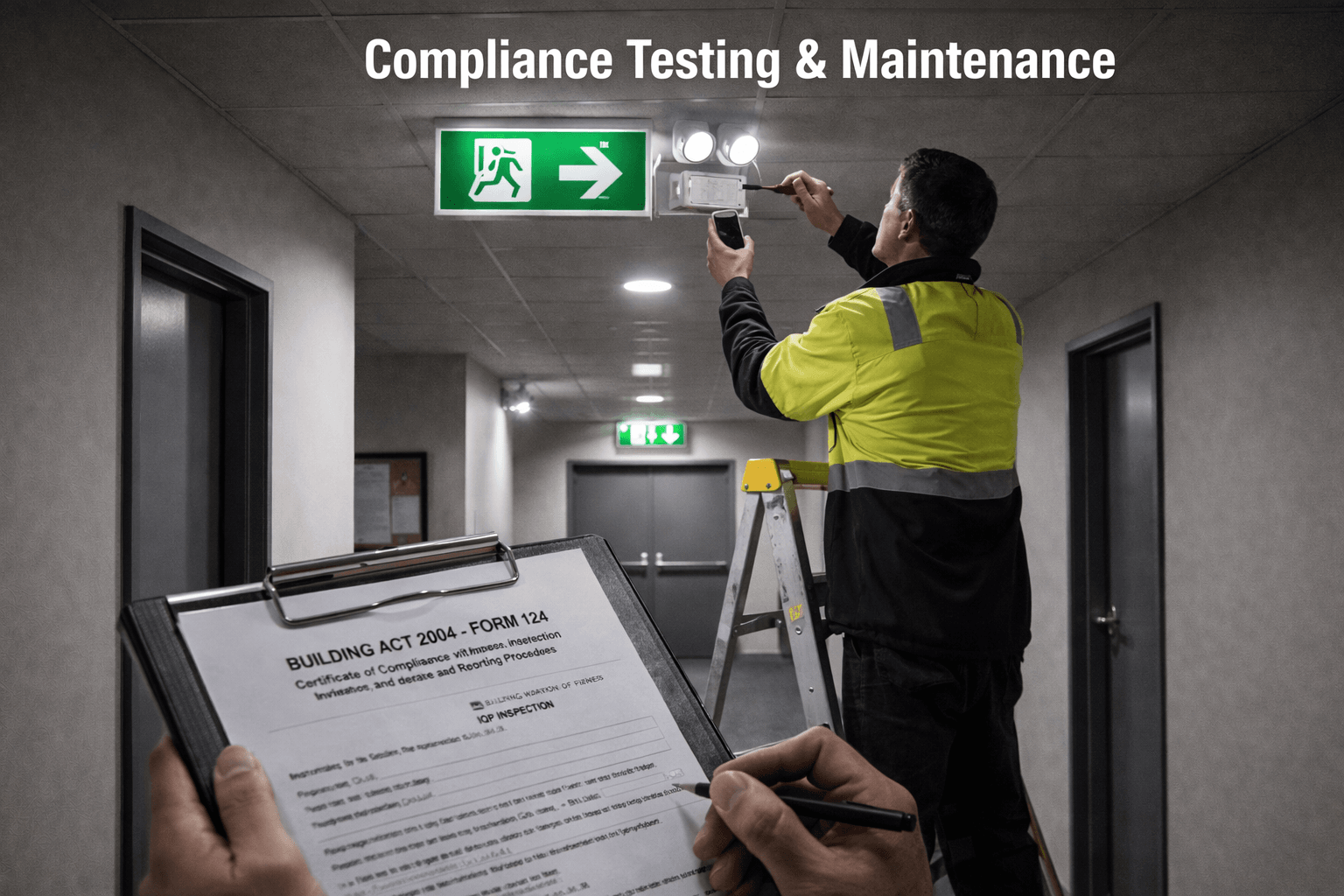
Emergency lighting is a specified system under the Building Act 2004. If your building has a compliance schedule, you need regular IQP inspections and Form 12A certification to issue your annual Building Warrant of Fitness.
Testing requirements (AS/NZS 2293.2):
We provide scheduled maintenance contracts to ensure your emergency lighting remains compliant year-round. Our IQP certification covers SS4 (Emergency Lighting) — we inspect, test, and issue Form 12A certificates for your BWOF submission.
Security systems require reliable, dedicated electrical infrastructure. We provide the electrical services needed to support CCTV, access control, alarms, and intercoms — ensuring your systems stay operational 24/7.
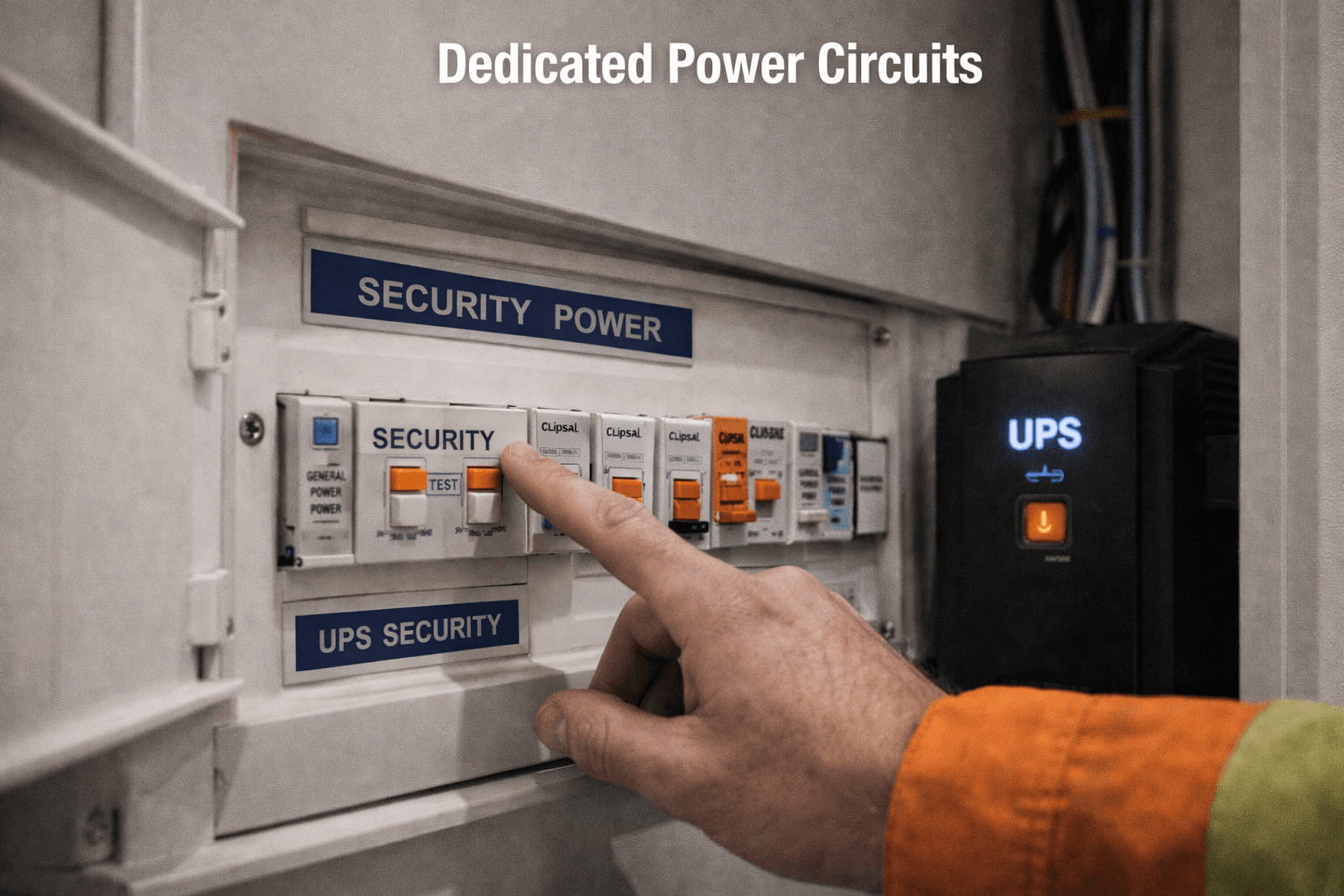
Security systems should run on dedicated circuits, separate from general building power. This prevents interference, simplifies troubleshooting, and allows for targeted UPS backup.
We install:
All electrical work complies with AS/NZS 3000:2018 (Australian/New Zealand Wiring Rules) and is completed by registered electricians.
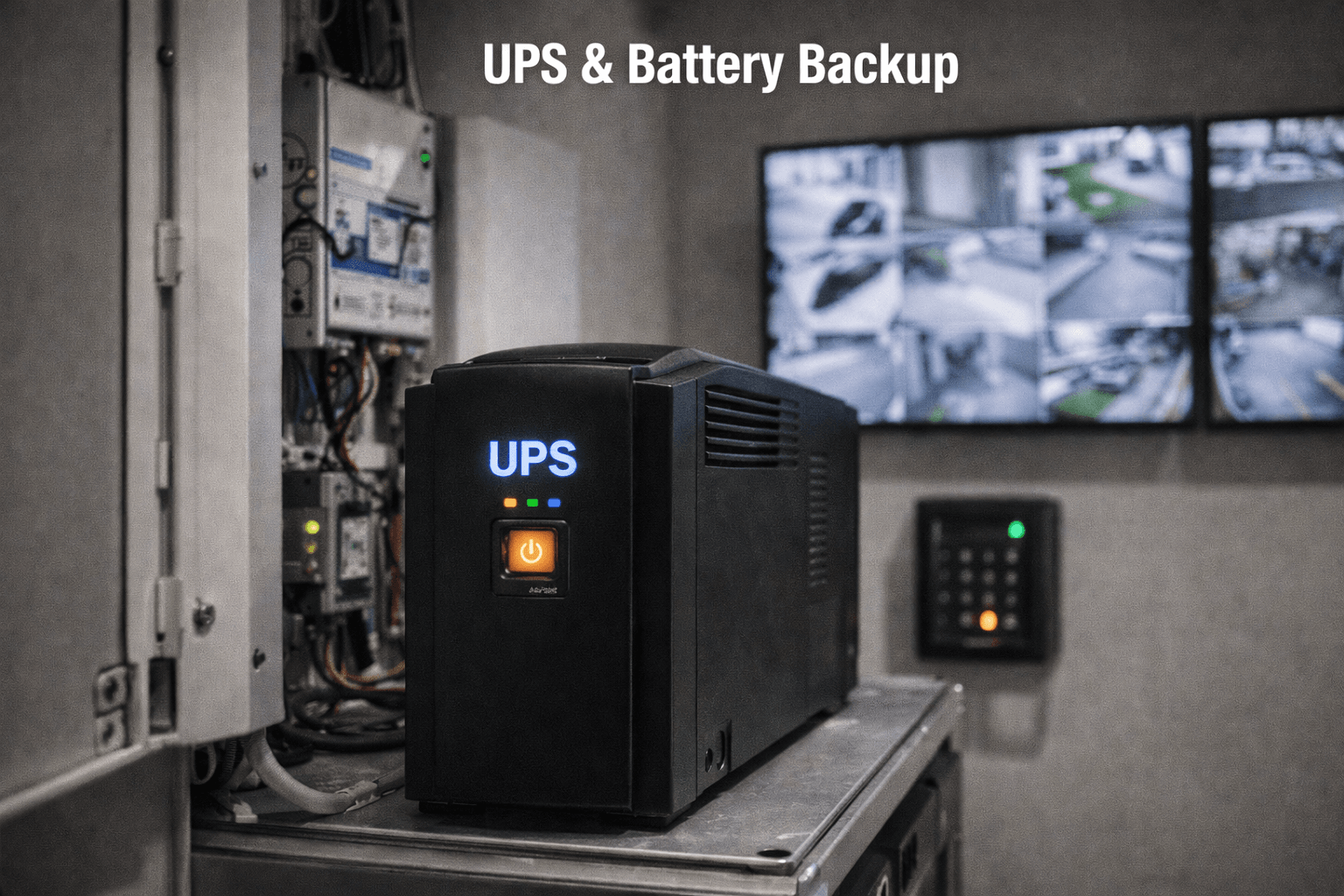
An Uninterruptible Power Supply (UPS) keeps your security systems running during power outages — critical for maintaining surveillance coverage and access control when you need it most.
Why UPS matters for security:
UPS options:
Sizing guidance: A typical 4-camera NVR system (60VA load) can run 3+ hours on a 1500VA UPS. We calculate your system's requirements and recommend appropriately sized units with runtime to match your needs.
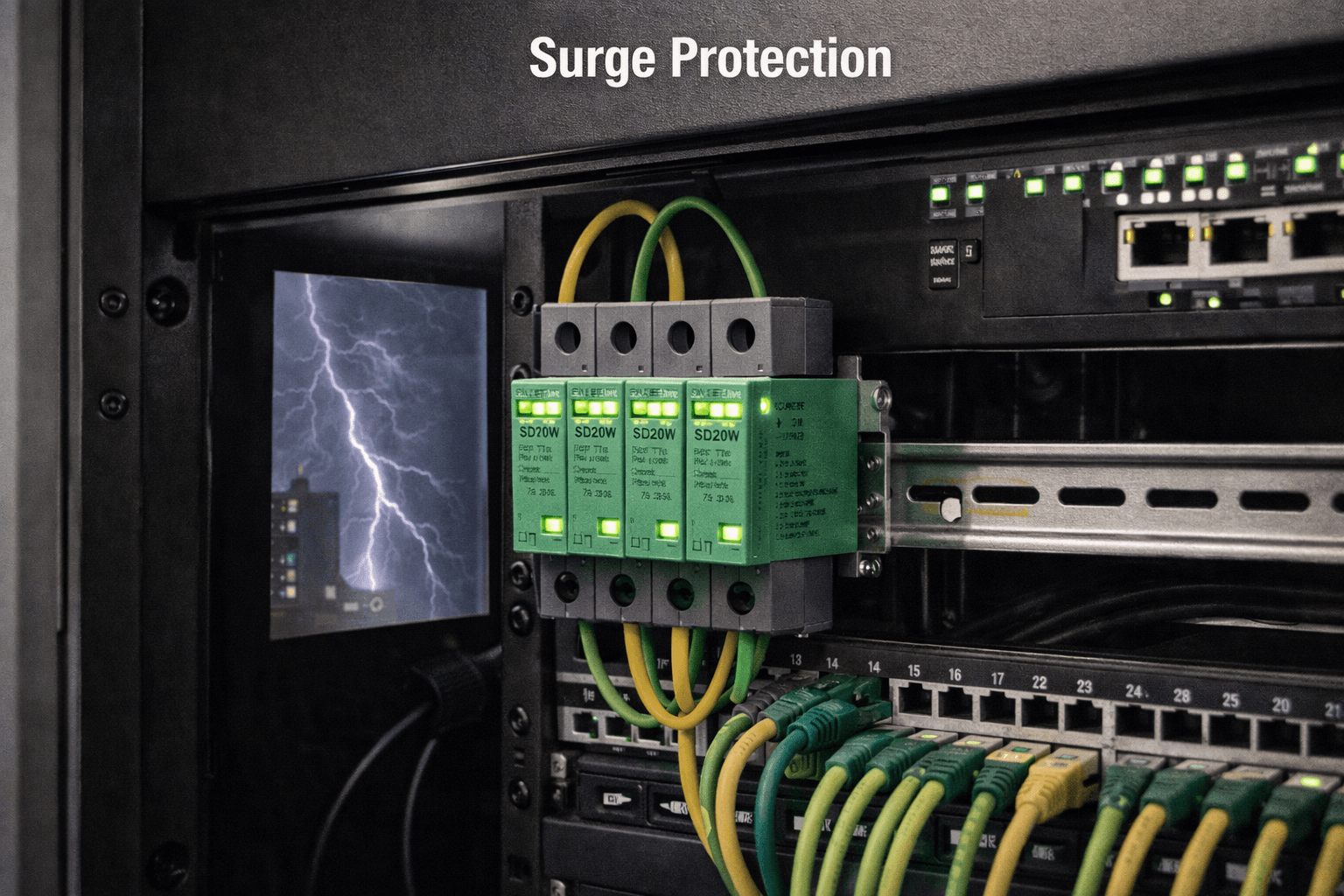
Power surges from lightning strikes, grid switching, or equipment faults can destroy sensitive security electronics in milliseconds. Surge protection devices (SPDs) divert excess voltage away from your equipment.
Protection points:
Surge protection is particularly important for CCTV systems with cameras exposed to outdoor conditions and long cable runs.
Security lighting works best when it's designed alongside your CCTV and access control systems — not as an afterthought.
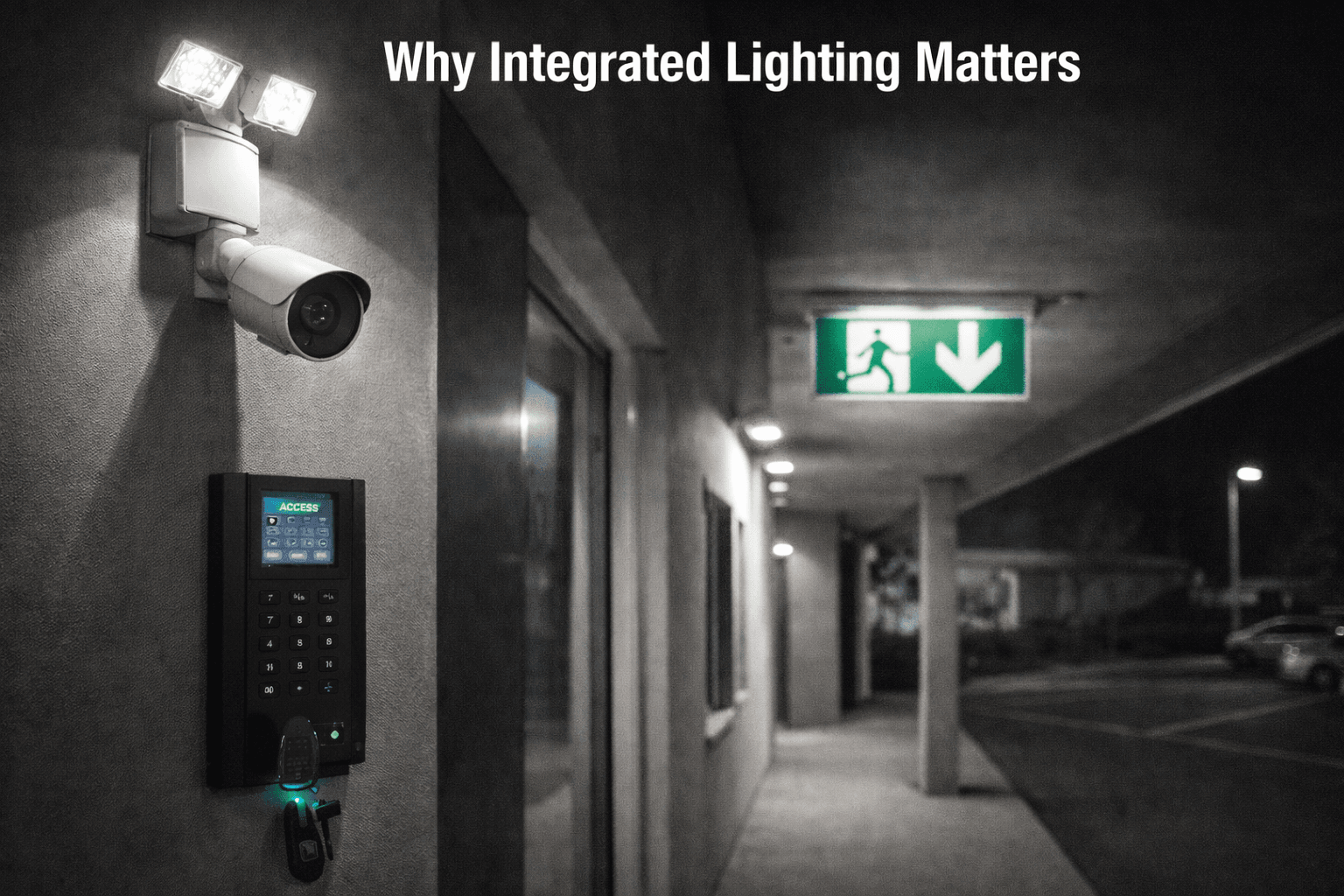
Because we install both the lighting and the security systems, we ensure everything works together. Your cameras get the illumination they need, your motion sensors don't create false alarms from shadows, and your electrical infrastructure supports the entire system reliably.
LED floodlights offer the best combination of brightness, efficiency, and lifespan. For motion-activated security, PIR sensor lights are ideal — they conserve energy while providing instant illumination when triggered. Cool white (5000K–6000K) typically provides better visibility for security purposes.
For residential areas, 1,000–2,000 lumens per floodlight is usually adequate. Commercial or industrial sites may need 3,000–10,000+ lumens depending on the area size. We design lighting to match your specific site requirements and CCTV camera specifications.
If your building has a compliance schedule listing SS4 (Emergency Lighting Systems), yes — it's a legal requirement. Most commercial buildings, workplaces, and public-access buildings require emergency lighting to meet Building Code clause F6.
AS/NZS 2293.2 requires 6-monthly 90-minute discharge tests plus annual inspections. Results must be recorded in a logbook and certified by an IQP for your Building Warrant of Fitness.
Yes — a correctly sized UPS provides battery backup so your NVR/DVR and cameras continue recording during outages. Runtime depends on your system's power consumption and the UPS capacity. We can calculate requirements and recommend suitable units.
Absolutely. Motion sensor lights can trigger on alarm activation, and alarm sensors can activate floodlights. This integration enhances both deterrence and footage quality during security events.
Whether you need security lighting for a new site, emergency lighting upgrades for compliance, or UPS backup for your existing security systems, we provide complete solutions designed for your specific requirements.